For Retreat Organisers
Retreat Venue Checklist: 25 Questions to Ask Before Booking in Spain
Group size, bedrooms, practice space, catering, transport and booking terms
Finding a retreat venue can be one of the most enjoyable parts of planning a trip. You look through photos of terraces, practice spaces and mountain views and begin imagining your group there. The photographs matter, but they’re only one part of the decision.
The questions that make a retreat feel easy to organise are often less glamorous. Can your group actually sleep in the rooms available? Will the studio work for your style of practice? What happens if the weather changes? Who is responsible for meals and cleaning? And what does the price include?
Use this checklist when comparing retreat venues in Spain. It is written for yoga teachers, wellbeing facilitators and small-group organisers. You can copy the questions into an email, take them to a viewing or keep them beside you when requesting quotes.
Start with your group, not the property
Before you contact a venue, estimate how many people will travel and what they will need. Separate paying participants from teachers, assistants and visiting professionals. Also think about how your group prefers to stay: shared rooms, twin rooms or private accommodation.
A headline like “sleeps 20” can sound perfect until you discover that the number includes staff beds, sofa beds or arrangements that don’t work for your guests. Ask for a room-by-room breakdown rather than making assumptions.
Questions 1–5: capacity and bedrooms
1. How many paying participants can stay overnight? Ask for a clear answer that excludes, or explicitly includes, facilitators.
2. How many additional facilitators can stay? A retreat host may need a separate room or an early night, especially when leading sessions each morning.
3. What is the exact bedroom and bathroom layout? Request an updated floor plan, with each room’s beds and bathroom access shown.
4. Are shared and private room options possible? If you plan to charge different ticket prices, the available room types must support them.
5. Can guests with particular accessibility needs use the accommodation? Ask about steps, level access, bathroom layouts and distances between buildings. Never assume that a rural property is accessible from photographs alone.
If these questions raise concerns, it is better to adapt the group size early than to promise accommodation that later proves difficult.
Make sure the practice space fits the programme
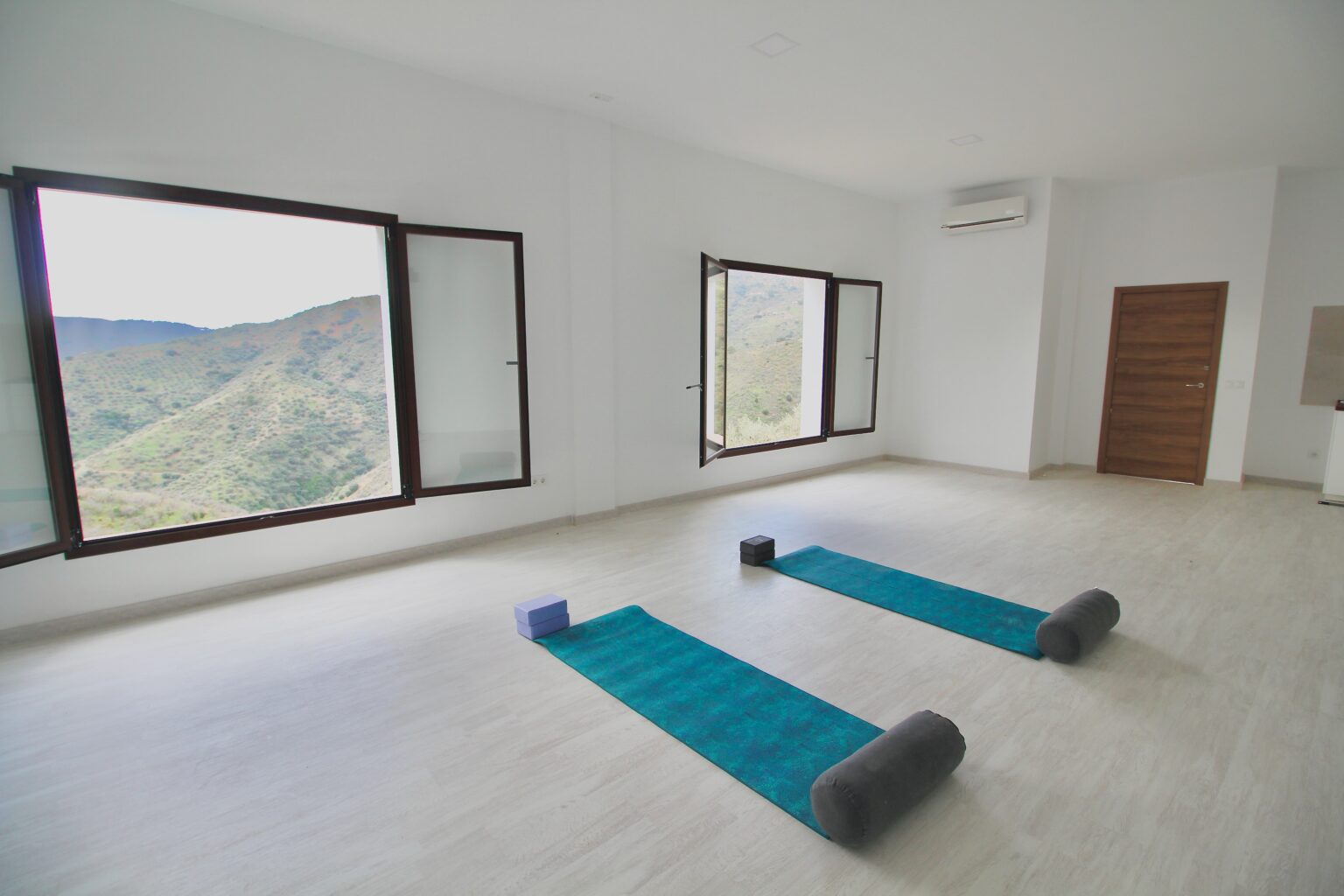
A beautiful studio can still be the wrong room for a particular activity. A gentle yoga class, a movement workshop and a seated coaching session all need different layouts.
Ask about the size and surface of the practice space, ventilation, temperature, sound limitations and available equipment. Imagine how people will enter, move around and leave the room. Think about whether mats, chairs or tables need to be moved between sessions.
Questions 6–10: activities and shared space
6. How many people can practise comfortably at one time? Use the actual floor area and layout, not just a maximum occupancy number.
7. What equipment is already available? Confirm numbers of mats, blocks, blankets, bolsters, cushions and any sound equipment you plan to use.
8. Is there an indoor backup for outdoor sessions? Rain, wind and very warm weather can change the best-laid plan.
9. Where will we eat, gather and run workshops? A studio alone is not necessarily suitable for group meals or presentations.
10. Are there restrictions on noise, session times or activities? Discuss music, evening gatherings, breathwork and external professionals before advertising the programme.
At Monte Naturivo in Málaga, organisers can discuss the indoor yoga studio and outdoor practice areas alongside accommodation in Villa Trompetilla and Casa Cactus. The suitability of the setup should always be confirmed for your group and programme.
Find out what is included in the quote
Two prices can look very different while covering almost the same things. Equally, two similar prices can have very different inclusions.
Ask for a quote that makes a distinction between the venue itself and optional services. It should be clear whether you are paying for the whole property, specific buildings, a package with meals or a price per participant.
Questions 11–15: price and service
11. Is the venue exclusive to our group? If privacy matters, get the answer in writing. Do not infer exclusivity from the word “retreat”.
12. Are bedding, towels, cleaning and use of facilities included? Include pools, saunas and specialist equipment in the conversation if you plan to promote them.
13. Can catering be arranged, and what is included? Ask about meal times, drinks, snacks, staffing, dietary arrangements and the cost of extras.
14. What additional costs might apply? Examples can include heating, equipment, services, transfers, visitor fees or cleaning. Ask which are actually relevant to your booking.
15. What are the deposit, payment and cancellation conditions? Confirm amounts, deadlines, refunds and what happens if the group is smaller than expected.
A written breakdown helps you compare offers fairly. It also gives you a more reliable foundation for participant pricing. Our retreat budgeting guide explains how to turn the proposal into a workable overall budget.
Look carefully at location and travel
A rural retreat can be exactly what your group is looking for. Quiet surroundings, views and time outside can give the programme room to breathe. They also create practical decisions around arrival, transfers and supplies.
For a venue outside town, don’t assume taxis will be readily available or that every participant will be comfortable driving. Ask how guests should reach the property, especially if they are arriving from different countries.
Questions 16–20: arrival and practical logistics
16. What is the recommended arrival route? Ask for the precise address, map pin and any important information about the final approach.
17. How do guests get there without a car? Clarify whether transport is included, can be arranged separately or is entirely up to guests.
18. Is parking available and how many vehicles can use it? This matters if facilitators or local attendees will drive.
19. How reliable are internet, mobile contact and electricity for our needs? If you need hybrid sessions, live streaming, music equipment or special heating, explain that before booking.
20. What should guests bring? Ask about weather, footwear, towels, equipment, refillable water bottles and any other recommended items. Publish a packing list that matches what the venue actually provides.
Wherever possible, give guests one concise arrival guide before they travel. A confused arrival is not the welcome you want after a long journey.
Choose a venue you can work with
A retreat is a collaboration between the host, the venue and often a small team of local professionals. Clear responsibilities matter. If something unexpected happens, you want to know whom to contact and what has been agreed.
Questions 21–25: people and responsibilities
21. Who is our main point of contact before and during the retreat? Ask about normal communication and how urgent practical issues are handled.
22. Are external facilitators or professionals allowed? If you are bringing your own teachers, chef or therapist, confirm the rules in advance.
23. What safety arrangements are relevant to our activities? Ask who manages property safety and what your own professional insurance needs to cover. Do not treat this checklist as a substitute for formal advice.
24. Can the venue help us create a workable rooming plan? Share guest requirements privately and request a confirmed layout before selling specific room types.
25. What exactly must be agreed before we take payments from participants? At minimum, you need an accurate room plan, written financial terms, confirmed dates and an honest list of what’s included.
The printable retreat venue checklist
Copy this section into your notes. Check each item only when you have verified the answer, ideally in writing.
Group and accommodation
Programme spaces
Price and booking
Arrival and operations
People and responsibilities
What makes a retreat venue a good fit?
A good fit is not necessarily the most luxurious property or the one with the longest list of facilities. It is a venue where the sleeping arrangements, shared spaces, way of working and overall budget support the experience you want to create.
For a smaller group, privacy and a calm schedule may matter more than the largest studio. For a programme with several facilitators, flexible shared spaces and a thoughtful room layout may make all the difference.
Looking at retreat venues in southern Spain?
If you are exploring retreat venues in southern Spain, take a look at Monte Naturivo’s venue rental information and the two houses, Villa Trompetilla and Casa Cactus. You can send your proposed dates and group needs and ask for an arrangement tailored to your retreat.
The best next step is not to commit before you’re ready. It is to ask the questions that let you make a clear decision.
Discuss your retreat with Monte Naturivo