For Retreat Organisers
How to Plan Rooms for a Retreat: Guests, Facilitators and Shared Spaces
Shared rooms, privacy needs and group capacity: a practical rooming guide for retreat hosts
You may have found a retreat venue with a beautiful studio and enough beds for your group. That is a good start. But a retreat needs more than a bed count: people have to feel comfortable with where they will sleep, who they share with and how much privacy they can expect.
A group of twelve participants can need a very different layout from another group of twelve. One group may be happy to share twin rooms. Another may include couples, guests who prefer to sleep alone and facilitators who need quiet space between sessions.
A rooming plan helps you see these differences before you publish your retreat offer. It is one of the most useful pieces of planning you can do early, especially when you are organising a retreat outside your own country.
Why is the number of beds not enough?
A venue might advertise sixteen beds, but that does not mean it can provide sixteen private rooms. Beds may be arranged in twin rooms, shared rooms, bunk beds or separate buildings. Some sleeping spaces may be intended for staff rather than paying participants.
Ask the venue for an up-to-date floor plan with room names, bed types, bathroom arrangements and any restrictions. If a room has two single beds, check whether it can be used as a private room for one guest and what that means for your overall capacity.
The safest rule is simple: do not sell a room type or a maximum participant number until the venue has confirmed it in writing.
Start by separating guests from the retreat team
First list everyone who needs to sleep on site. Separate paying guests from teachers, assistants, chefs and any visiting professionals who will stay overnight. These groups are connected, but they may have different needs.
A facilitator who leads the first session of the day may need quiet time in the evening. Someone working in the kitchen may need a room near a different part of the property. A photographer or guest teacher may only need accommodation for part of the programme.
None of these decisions should be made by taking a staff bed away from a paying guest at the last minute. Plan both sides from the beginning, even if you don’t yet know every person’s name.
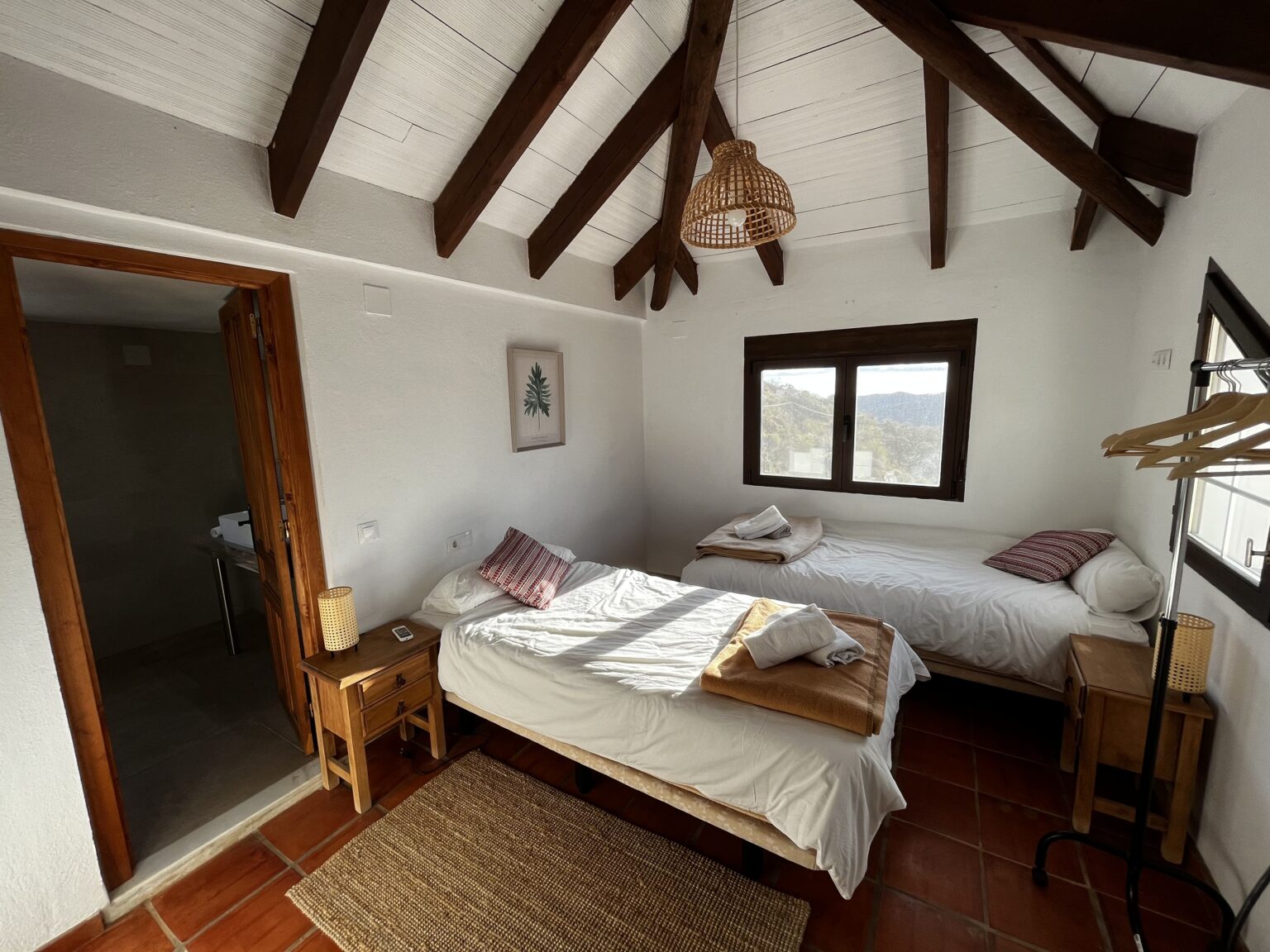
Shared rooms, private rooms or a mix?
Shared rooms can be part of the social side of a retreat, but they are not right for everyone. Make it clear what guests are buying.
If you offer a shared twin room, explain whether your guest will share with a friend they bring or with another participant. Let people state their preference privately. If you plan to pair solo guests, make sure you have a sensible approach if one person drops out or if the pair isn’t comfortable.
Private rooms are attractive to guests who want quiet time or a different level of privacy. They usually reduce the number of paying participants a room can hold. That needs to be reflected in your budget rather than treated as an afterthought.
A mixed approach can work well: a few private options alongside shared rooms, with clear pricing and a confirmed layout. But never promise privacy that the bedroom or bathroom arrangement cannot provide.
What should you ask about bathrooms?
A bedroom with an en-suite bathroom offers a different experience from a bedroom that uses a shared bathroom in the corridor. There is nothing inherently wrong with either, but guests should know which arrangement they are booking.
Count bathroom facilities in relation to the actual group and the timing of activities. If everyone wakes up for the same early morning practice, the practical flow matters. Ask whether bathrooms are used by particular rooms, by the whole house or by facilitators too.
It can help to note shower and toilet access separately when creating your rooming plan. Be accurate about these details in your guest information, especially if your ticket prices vary by room type.
How do you plan rooms for couples and friends?
Some guests will book as a pair and may want to stay together. Others are travelling with a friend but would prefer separate beds. Ask early rather than making assumptions.
Room configurations can be limited by the building, so check what is genuinely possible. If the venue has an annex or separate house, that may suit a pair or a small group, but it may also be an important part of the wider accommodation plan.
Be prepared for a rooming plan to change as bookings come in. Keep a clear version of your working plan and update it only when you know the change is possible.
What if guests have additional needs?
People may have mobility requirements, sensory preferences or other practical needs. Don’t ask everyone to share personal health information in a public booking form. Instead, offer a private way to discuss relevant access or accommodation needs and check directly with the venue what can be provided.
Rural buildings can include stairs, slopes and distances between facilities. A room near the studio may be more convenient for one person; another may prefer a quieter room further away. Confirm the actual layout and avoid calling a property accessible unless specific features have been checked.
If a requested arrangement isn’t possible, be clear as early as you can. It is better to help someone make an informed choice than to promise a solution you cannot deliver.
A simple retreat rooming worksheet
Create a table before opening registration. You don’t need guest names at first, only a sensible allocation of the types of places you plan to offer.
| Room | Beds available | Bathroom | Intended use | Confirmed by venue? |
|---|---|---|---|---|
| Room A | ____ | Private / shared | Guests / host / staff | Yes / No |
| Room B | ____ | Private / shared | Guests / host / staff | Yes / No |
| Room C | ____ | Private / shared | Guests / host / staff | Yes / No |
| Room D | ____ | Private / shared | Guests / host / staff | Yes / No |
| Additional rooms | ____ | Private / shared | Guests / host / staff | Yes / No |
Now write down three totals: planned paying guest places, facilitator/team places and unallocated places. Make sure your planned places fit the room-by-room layout, not just the headline property capacity.
If you have different ticket categories, map each to a specific confirmed room type. Keep the original allocation as a reference when bookings start coming in.
How does rooming affect the retreat budget?
Imagine that you have enough beds for a group, but several guests choose to book rooms privately. You may have fewer places to sell while your venue hire cost stays the same. That can change the cost per paying guest.
This is why accommodation planning and pricing should happen together. You don’t need to fix your ticket price before you understand how many rooms you can actually sell.
Our retreat budget guide helps you build those scenarios without assuming that every bed will be occupied by a paying participant.
How can a venue help you with room allocation?
A venue knows the building, the practical limitations and how the shared spaces connect. Send them the number of guests and facilitators, then ask for a rooming proposal. It’s much easier to adjust that proposal before registration opens than to move people around after they have arrived.
At Monte Naturivo, the accommodation is arranged across Villa Trompetilla and Casa Cactus in the mountains of Málaga. The houses have different layouts, so the right setup depends on the group and the rooms needed for the programme. The exact available capacity and rooming arrangements should be confirmed for your dates, including places for the retreat team.
You can share your draft rooming plan when you request retreat venue hire. We can discuss the accommodation options alongside the yoga and workshop spaces, so your guests understand what they are booking.
When should you finalise the rooming plan?
Prepare a provisional plan before you sell places. Confirm the types of rooms you are advertising and keep a record of what the venue has agreed. As bookings develop, update your plan carefully and check changes that affect room occupancy or shared facilities.
Before guests travel, send a clear, private room confirmation and practical arrival details. Do not circulate unnecessary personal information about guests to the whole group.
A thoughtful rooming plan may not be the most exciting part of hosting a retreat, but it makes a real difference to how well the experience runs.